project VISTO
project VISTO
Overview
VISTO — Screen Dependency Awareness is an information design project that raises awareness about excessive screen use through accessible and empathetic communication tools.
VISTO — Screen Dependency Awareness is an information design project that raises awareness about excessive screen use through accessible and empathetic communication tools.
Services
information design
graphic design
illustration
Services
information design
graphic design
illustration
Year
2025
Year
2025
Timeline
1 month
Timeline
1 month
Subject
information design
Subject
information design
About this project
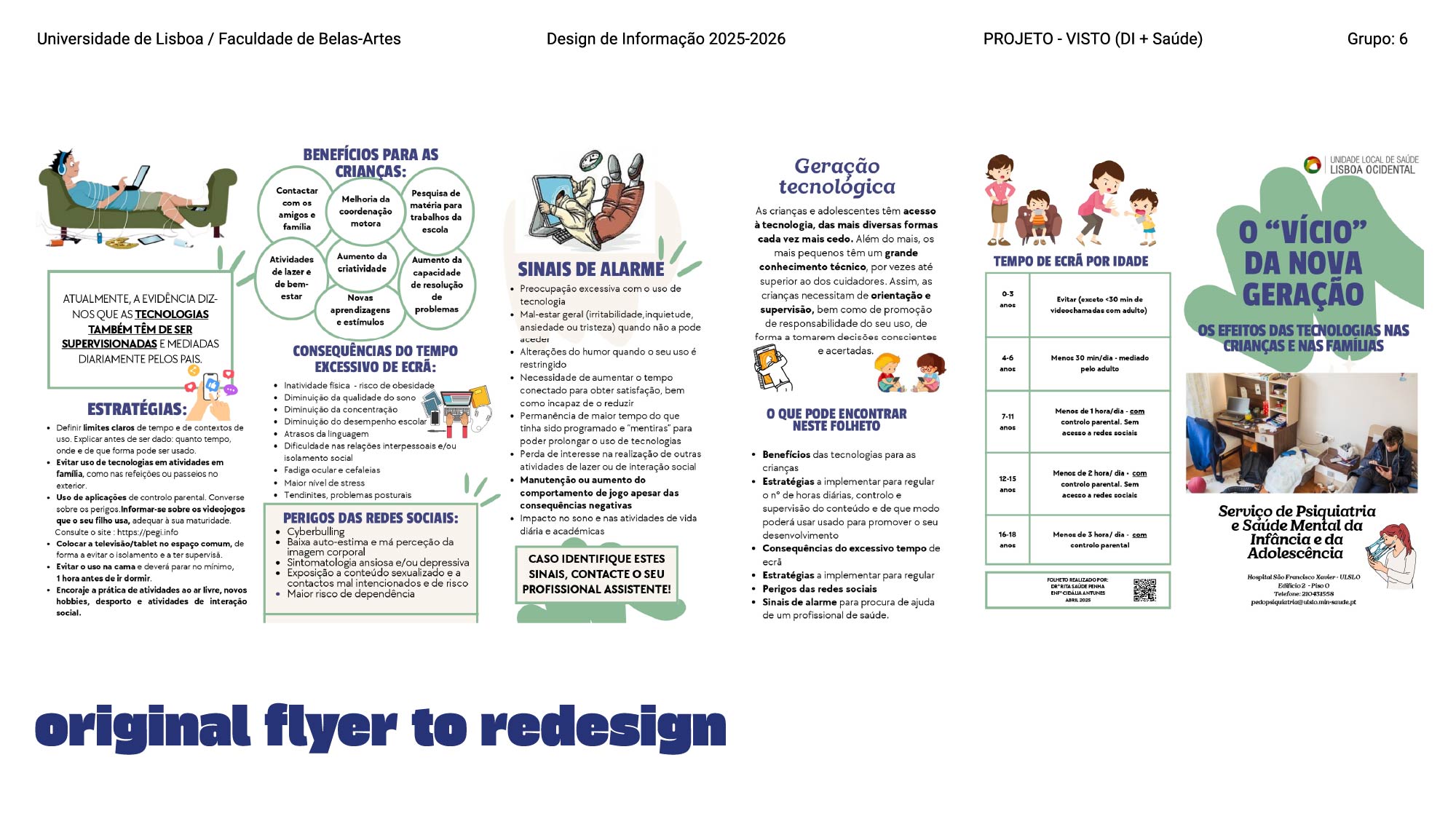
This project consists of a redesign of an informational flyer for the Local Health Care of Lisboa Oriente, focusing on screen dependency, done in collaboration with Inês Almeida, Joana Roldão and Clara Morais.
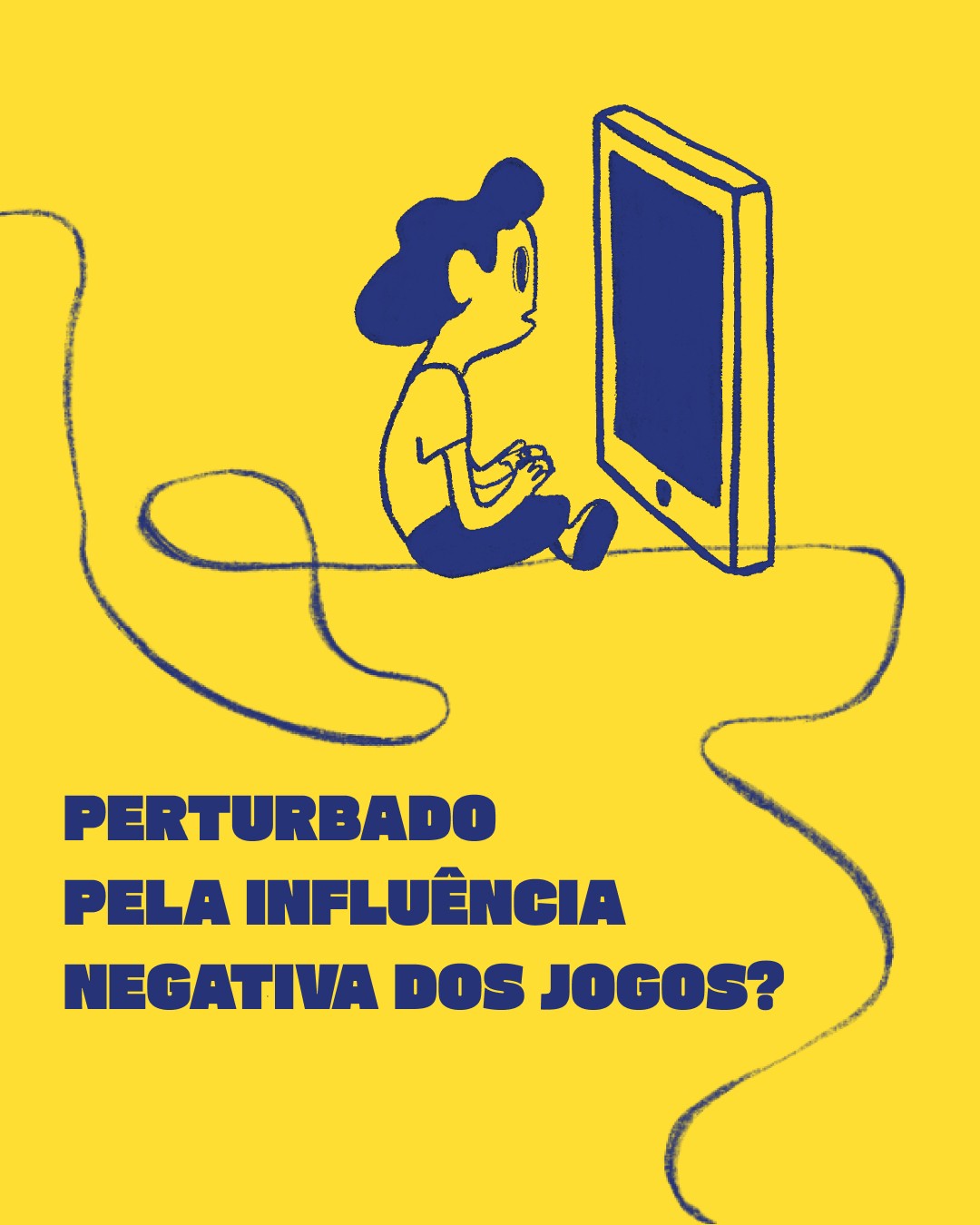
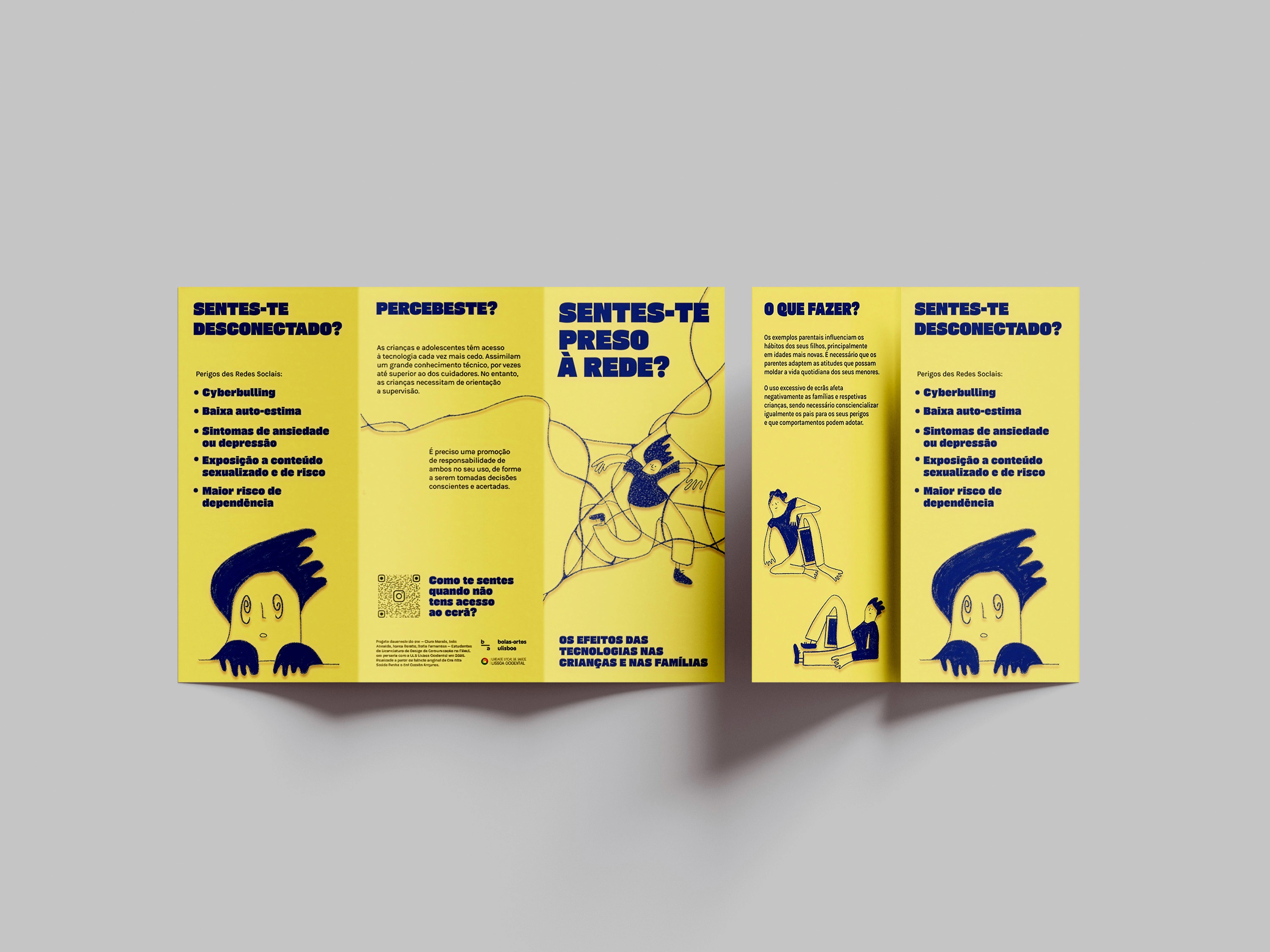
The proposal includes a trifold flyer aimed at parents and caregivers, and a digital carousel directed at teenagers. The project is based on the idea that adult behavior directly shapes children’s habits, positioning parents as agents of change.
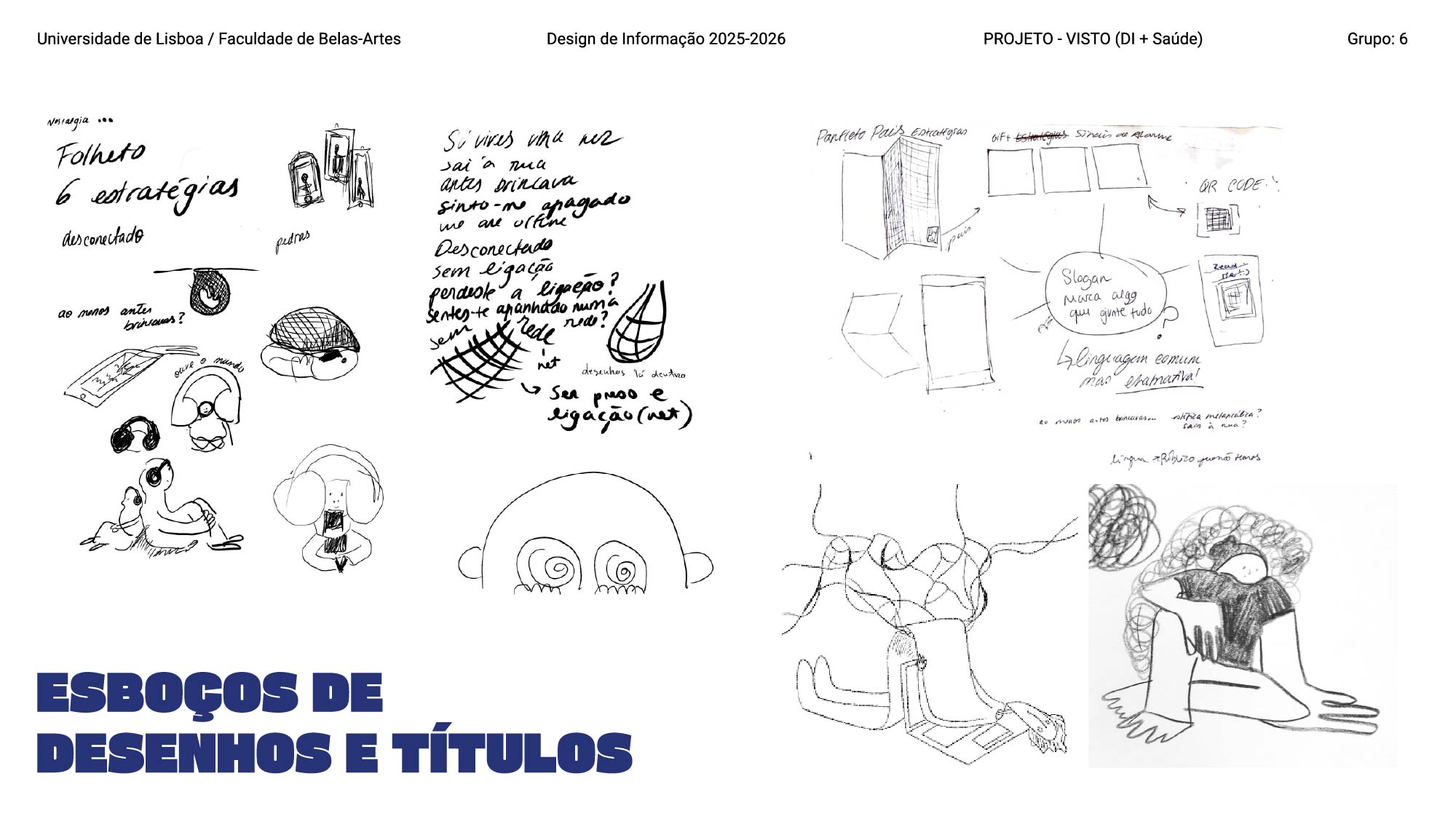
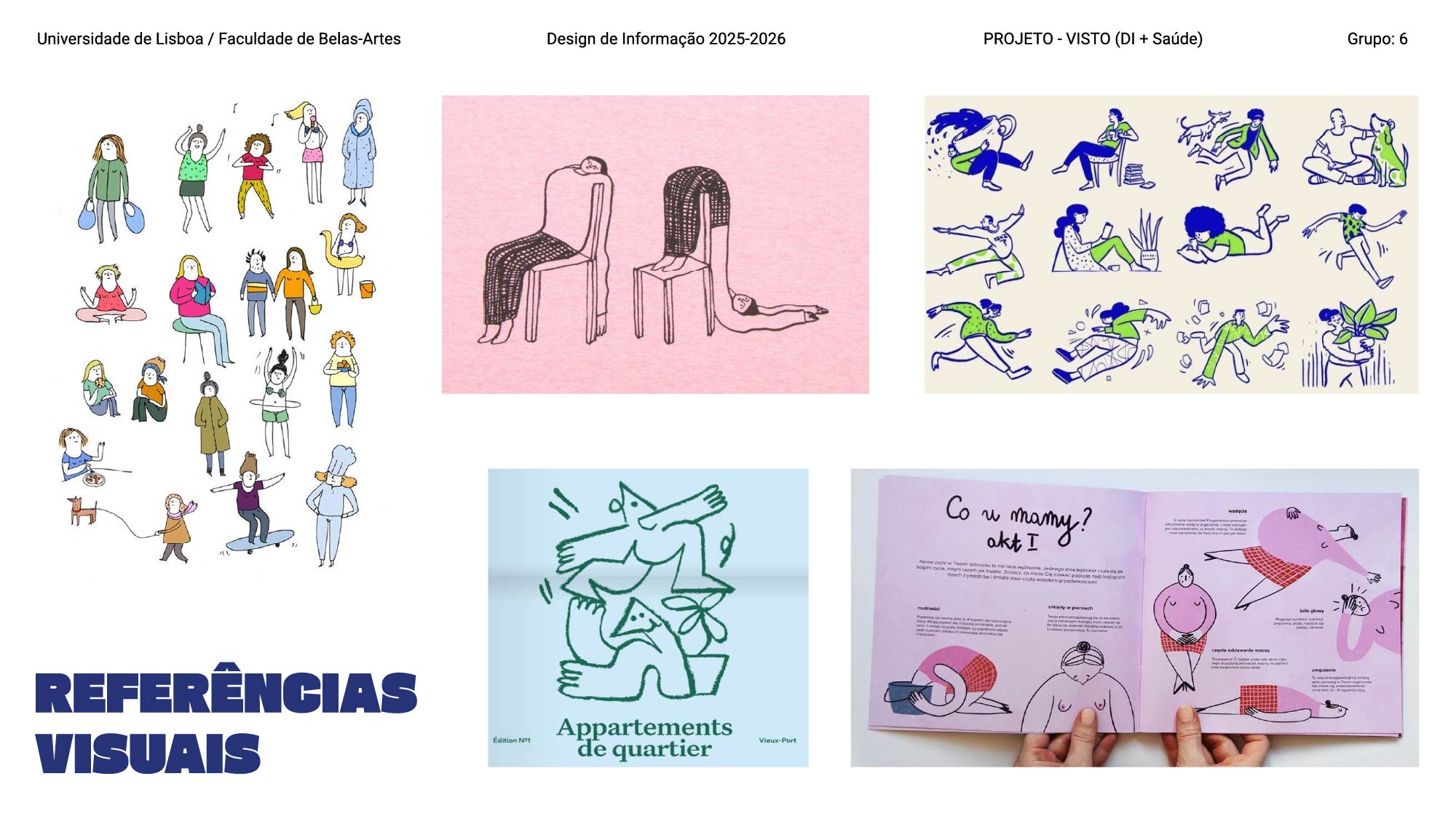
The visual concept is built around the idea of moulding: illustrated characters engage in social and offline activities while being physically shaped by screens. The metaphor is reinforced through the recurring presence of nets, playing on the double meaning of “network” — both digital and physical — as seen in the phrase “Sentes-te preso à rede?”. The digital component extends this narrative through animated posts (GIFs), where characters continue to interact with the net, creating visual continuity across platforms.
This project consists of a redesign of an informational flyer for the Local Health Care of Lisboa Oriente, focusing on screen dependency, done in collaboration with Inês Almeida, Joana Roldão and Clara Morais.
The proposal includes a trifold flyer aimed at parents and caregivers, and a digital carousel directed at teenagers. The project is based on the idea that adult behavior directly shapes children’s habits, positioning parents as agents of change.
The visual concept is built around the idea of moulding: illustrated characters engage in social and offline activities while being physically shaped by screens. The metaphor is reinforced through the recurring presence of nets, playing on the double meaning of “network” — both digital and physical — as seen in the phrase “Sentes-te preso à rede?”. The digital component extends this narrative through animated posts (GIFs), where characters continue to interact with the net, creating visual continuity across platforms.
Problem
The main challenge was to address screen dependency without directly blaming users, particularly younger audiences, while still encouraging behavioral change. It required identifying the most effective point of intervention, parents and caregivers, and designing communication that promotes reflection rather than imposition.
Another difficulty was structuring information for different audiences (adults and teenagers), while maintaining a coherent visual and conceptual system across both print and digital formats, that was both visual engaging, thought-provoking and eye-opener. Additionally, the project needed to consider real-world constraints of distribution, ensuring accessibility and adaptability in institutional contexts such as health centers and schools.
The main challenge was to address screen dependency without directly blaming users, particularly younger audiences, while still encouraging behavioral change. It required identifying the most effective point of intervention, parents and caregivers, and designing communication that promotes reflection rather than imposition.
Another difficulty was structuring information for different audiences (adults and teenagers), while maintaining a coherent visual and conceptual system across both print and digital formats, that was both visual engaging, thought-provoking and eye-opener. Additionally, the project needed to consider real-world constraints of distribution, ensuring accessibility and adaptability in institutional contexts such as health centers and schools.

Solution
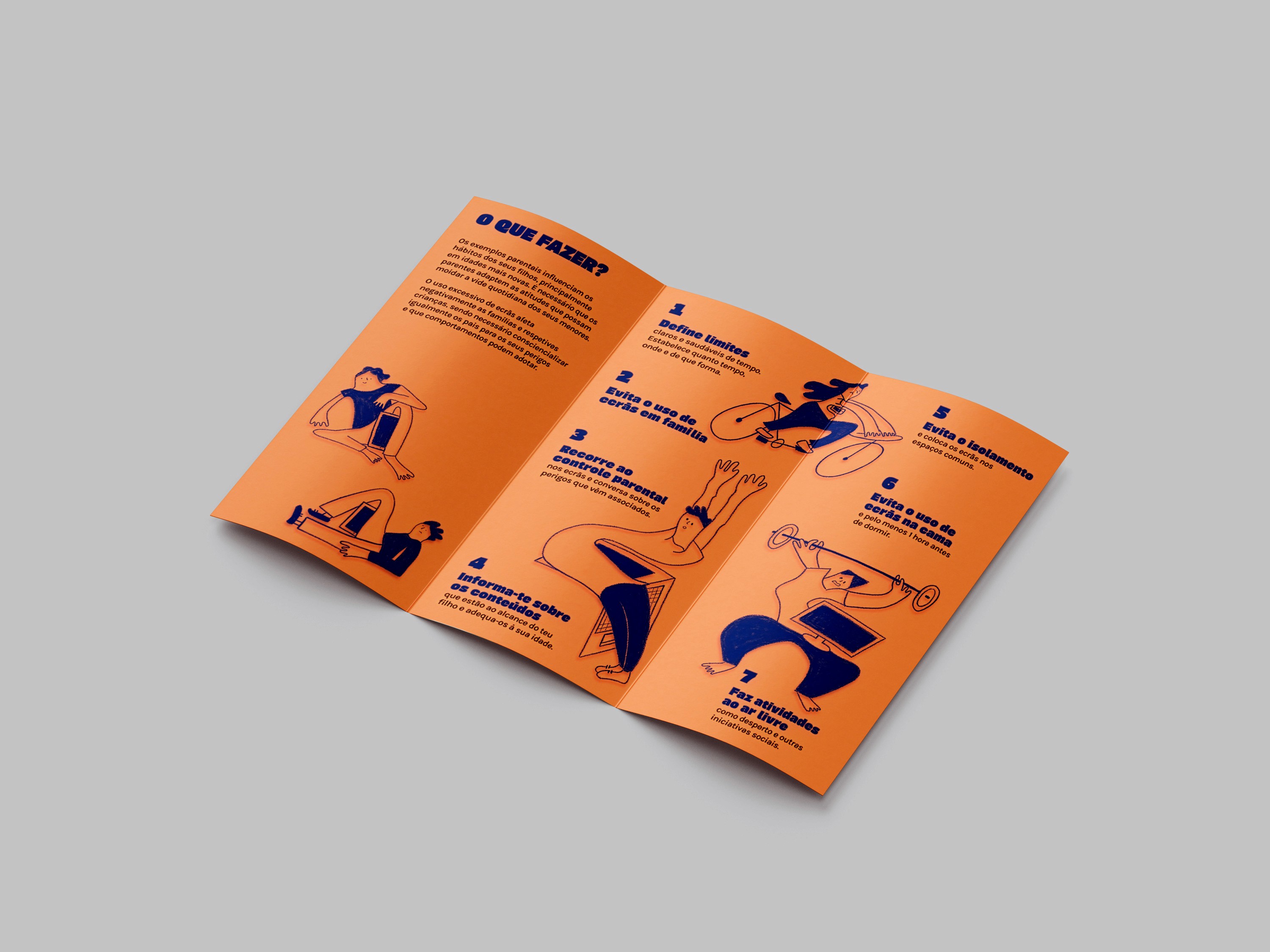
The project was developed as a dual communication system targeting two distinct audiences: a trifold flyer for parents and a digital carousel for teenagers, connected through a QR code. The flyer focuses on reflection and action, presenting risks alongside 7 practical guidelines that parents can apply to both their own behavior and their children’s daily habits. The tone encourages responsibility and awareness, positioning adults as role models in shaping screen use. The visual system is based on the concept of moulding, where characters are physically shaped around screens (phones, tablets, televisions), symbolizing behavioral influence. The recurring net element reinforces the idea of entrapment, both literal and digital.
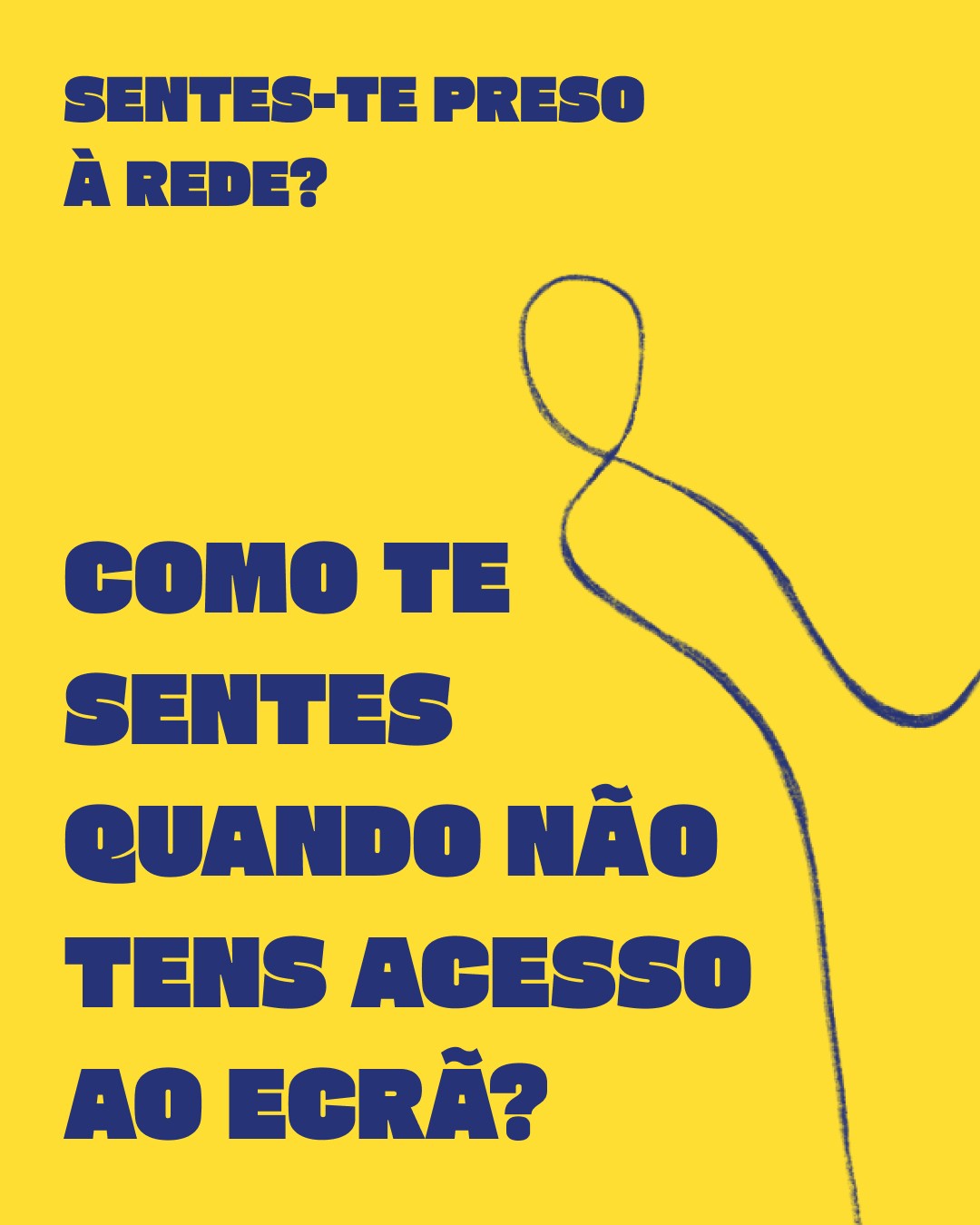
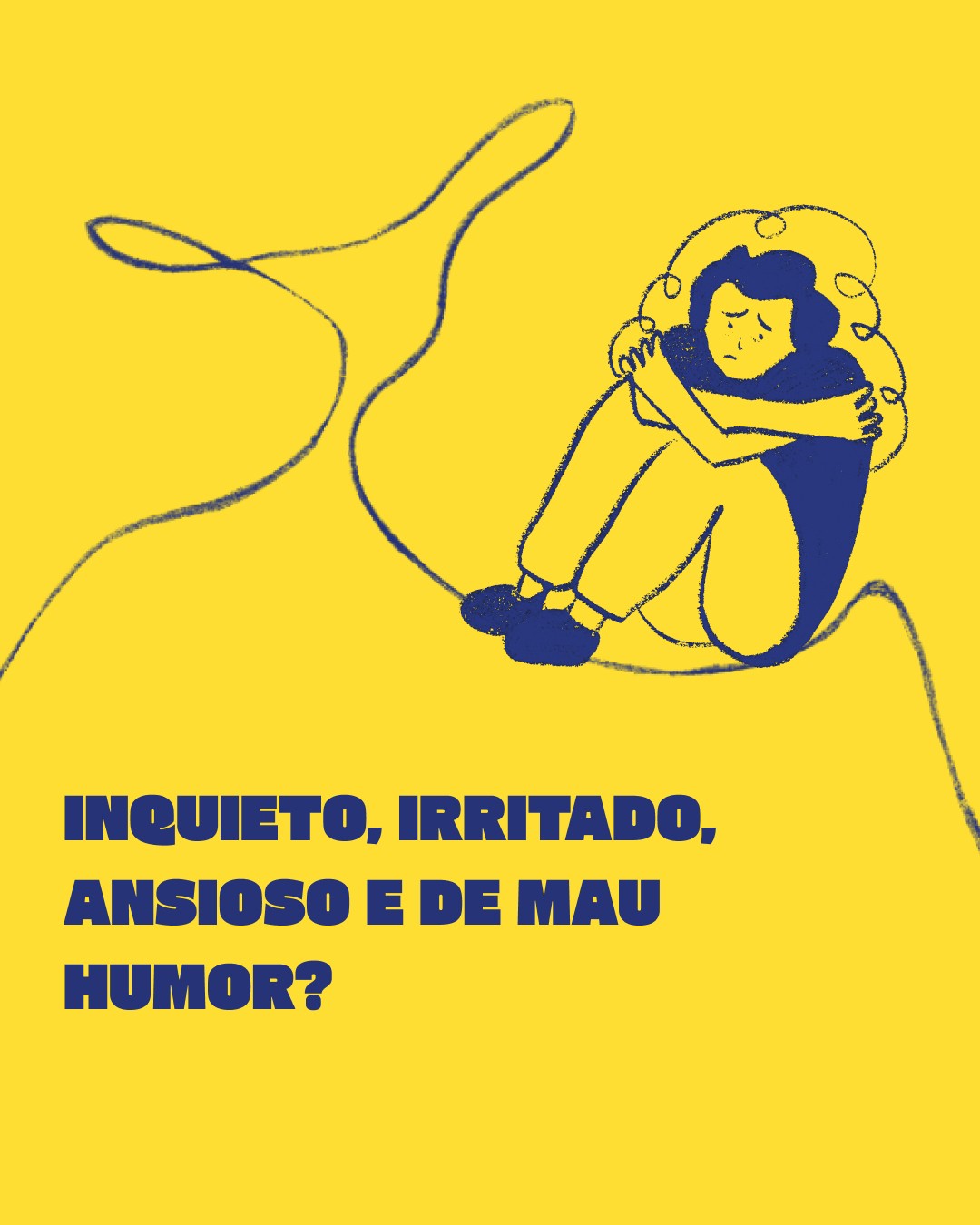
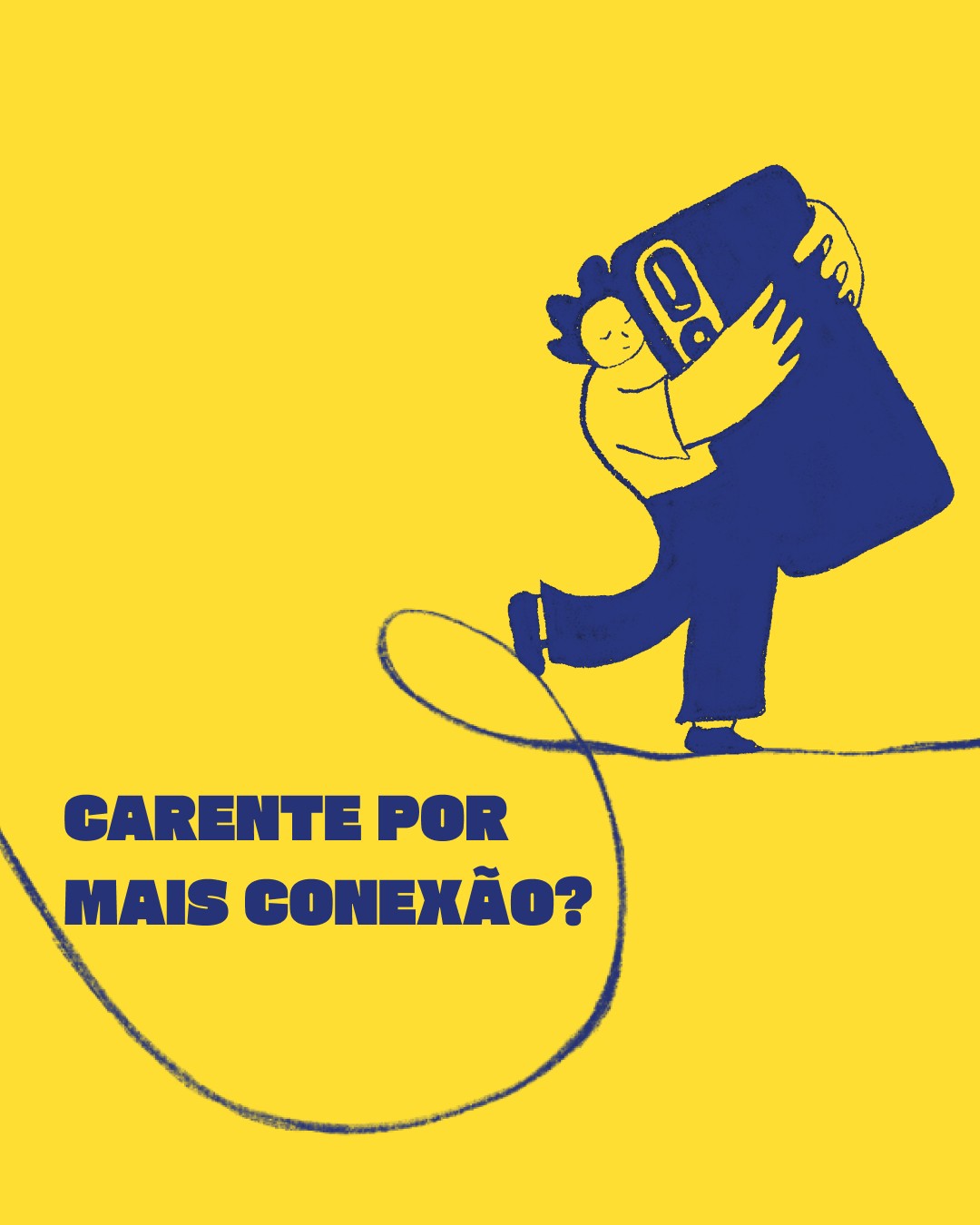
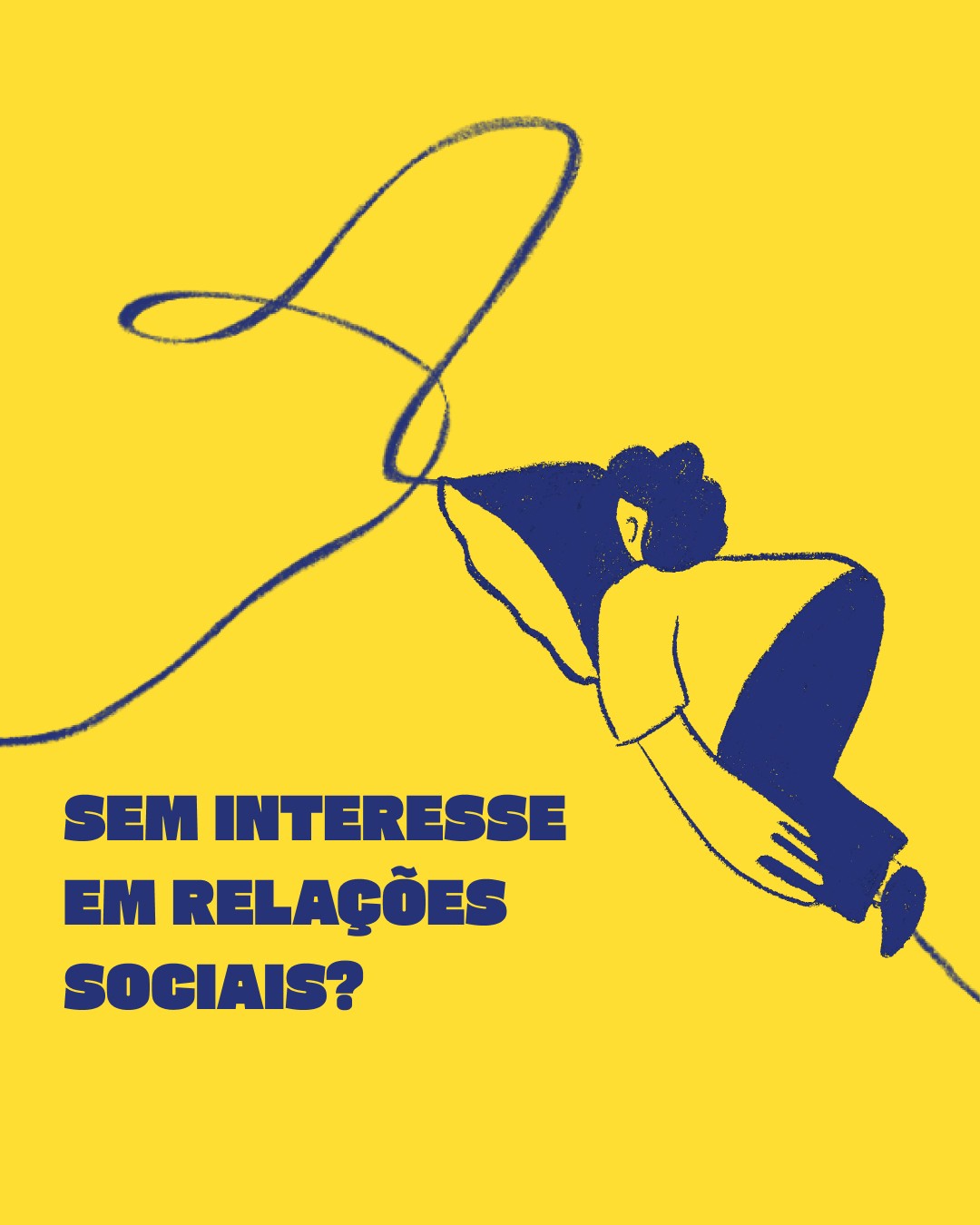
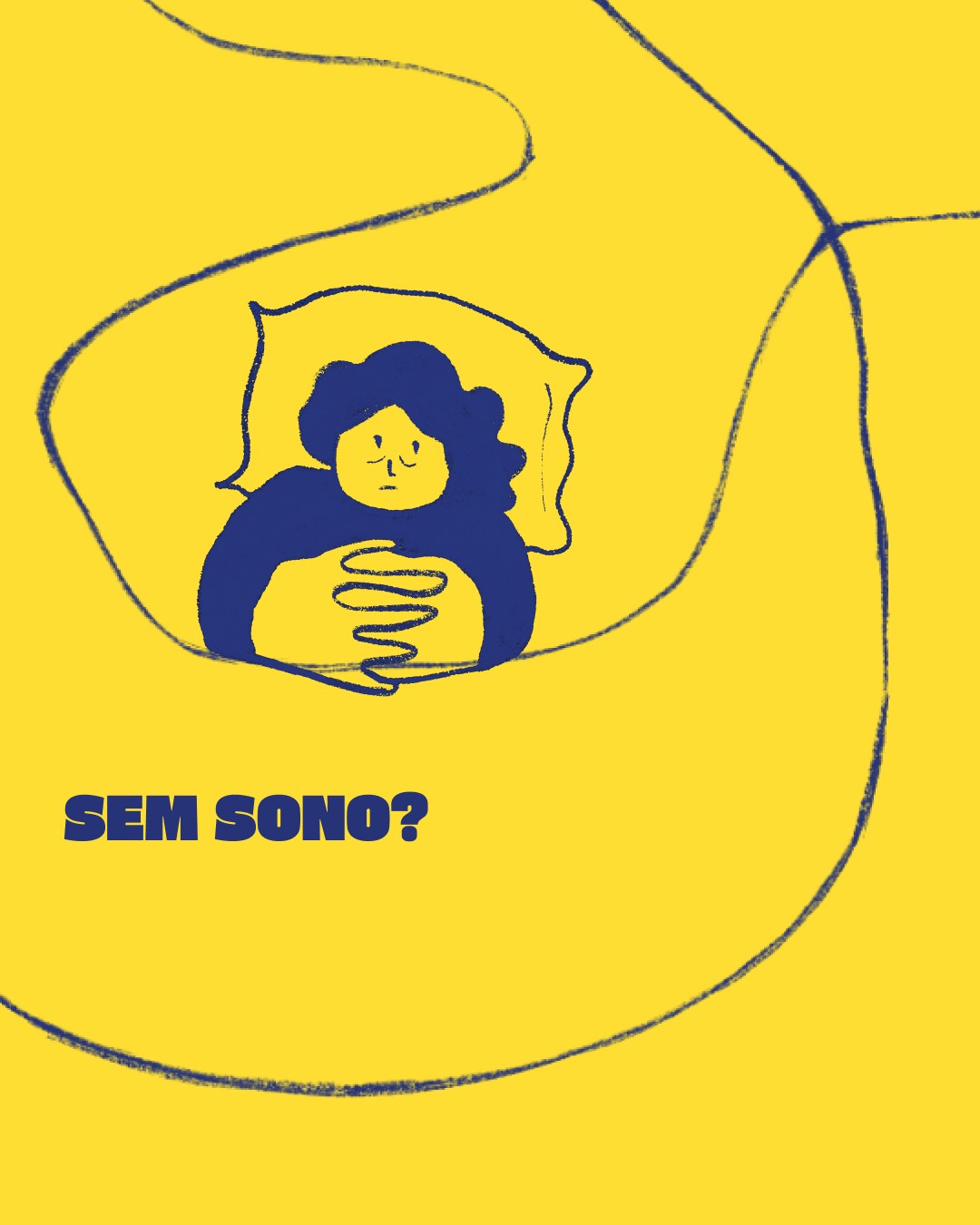
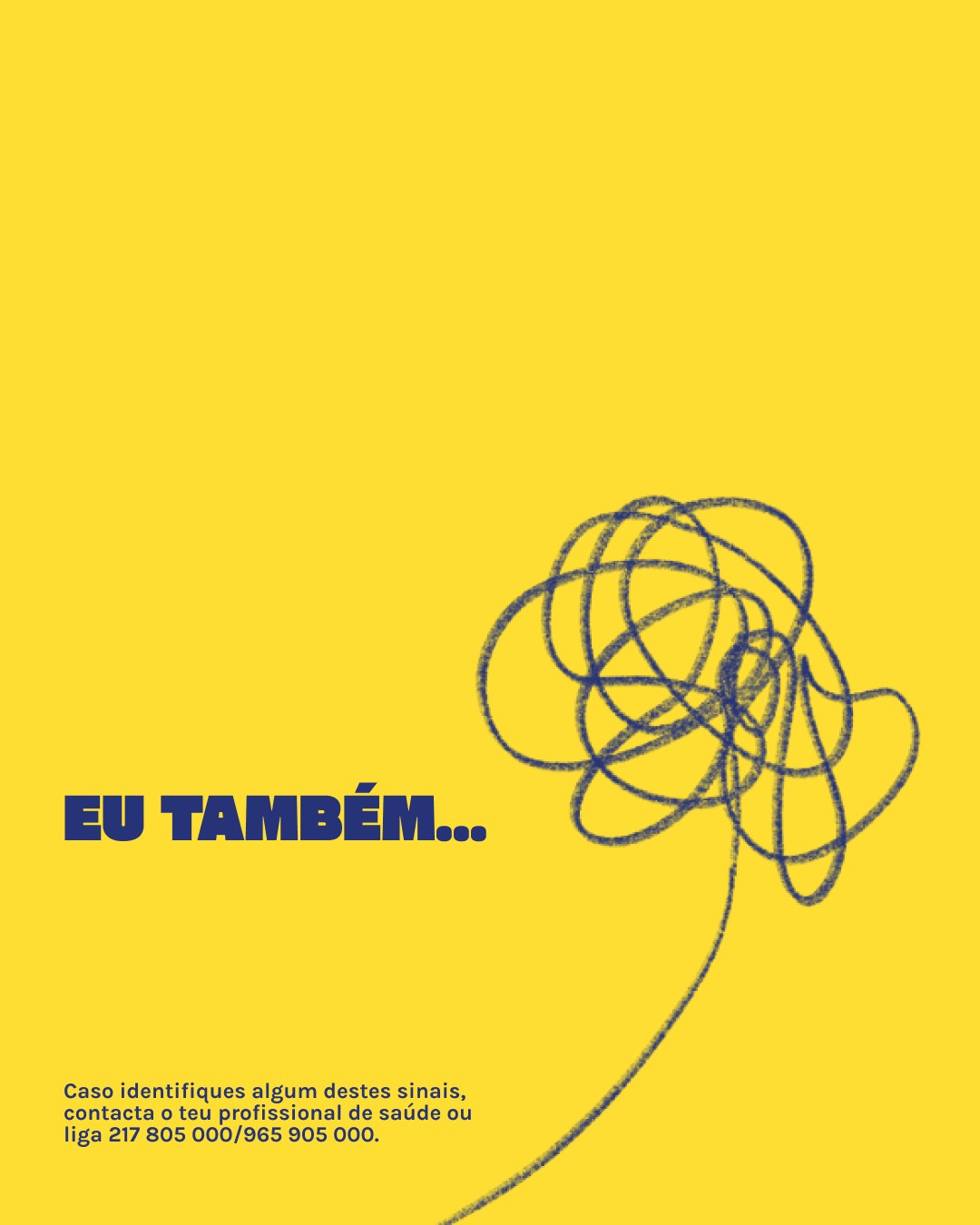
The digital carousel adopts a softer, introspective approach, using questions instead of statements to prompt self-awareness among teenagers. The sequence concludes with “me too”, creating a sense of shared experience rather than isolation. In the carousel, the net visually connects all posts, guiding the eye and maintaining continuity, while the characters interact with it in different ways (sitting on it, wrapped in it, or climbing through it, …) reinforcing the ongoing relationship between individuals and digital networks.
Practical production constraints were also integrated into the design: the flyer allows for multiple color variations and can be printed on colored paper, reducing ink usage and eliminating the need for trimming. This ensures accessibility and adaptability within healthcare environments.
The project was developed as a dual communication system targeting two distinct audiences: a trifold flyer for parents and a digital carousel for teenagers, connected through a QR code. The flyer focuses on reflection and action, presenting risks alongside 7 practical guidelines that parents can apply to both their own behavior and their children’s daily habits. The tone encourages responsibility and awareness, positioning adults as role models in shaping screen use. The visual system is based on the concept of moulding, where characters are physically shaped around screens (phones, tablets, televisions), symbolizing behavioral influence. The recurring net element reinforces the idea of entrapment, both literal and digital.
The digital carousel adopts a softer, introspective approach, using questions instead of statements to prompt self-awareness among teenagers. The sequence concludes with “me too”, creating a sense of shared experience rather than isolation. In the carousel, the net visually connects all posts, guiding the eye and maintaining continuity, while the characters interact with it in different ways (sitting on it, wrapped in it, or climbing through it, …) reinforcing the ongoing relationship between individuals and digital networks.
Practical production constraints were also integrated into the design: the flyer allows for multiple color variations and can be printed on colored paper, reducing ink usage and eliminating the need for trimming. This ensures accessibility and adaptability within healthcare environments.